Physics-grounded intelligence
Machine learning is paired with mechanics, simulation, and optimization so that generated designs remain interpretable and physically credible.
About
I connect AI-driven design, adaptive materials, advanced additive manufacturing, and bio-inspired robotics—co-designing the algorithm, architecture, material, and fabrication process as one physical system.
Profile
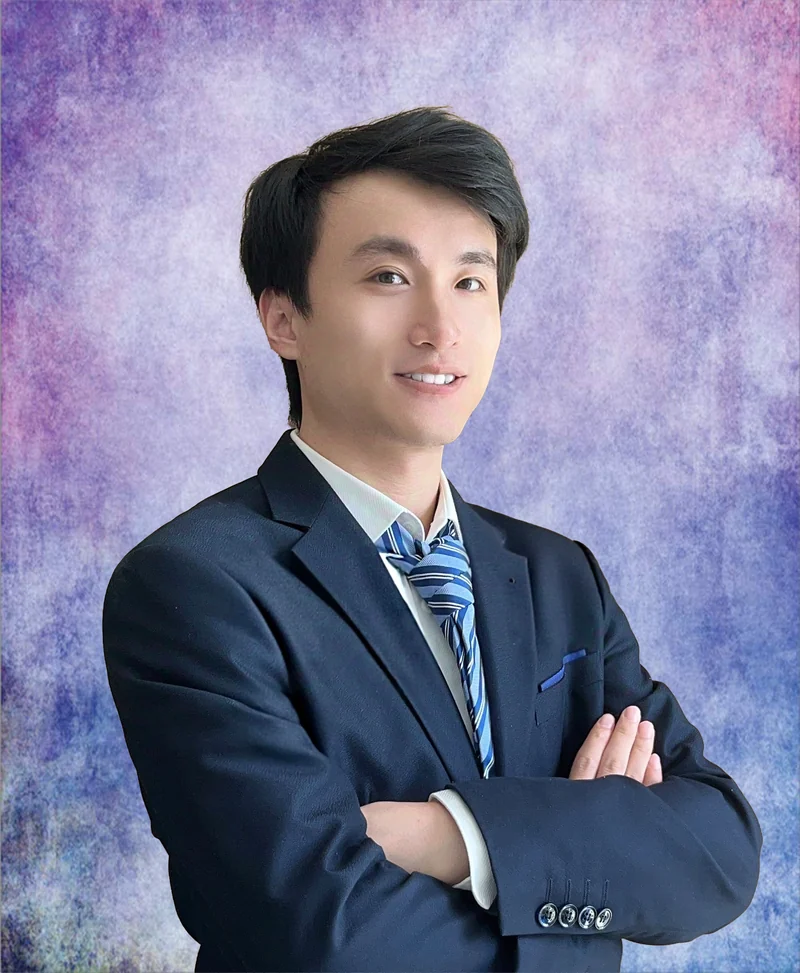
Liuchao Jin is a researcher at the intersection of artificial intelligence, computational mechanics, advanced manufacturing, and embodied intelligence. He conducted his doctoral research in Mechanical and Automation Engineering at The Chinese University of Hong Kong from 2022 to 2026 under Professor Wei-Hsin Liao as a Hong Kong PhD Fellowship Scheme awardee. He completed his BEng in Mechanical Engineering at the Sichuan University–Pittsburgh Institute with a GPA of 4.0/4.0, a weighted average of 96.29/100, and the top rank in a cohort of 79. A research visit at the Southern University of Science and Technology (SUSTech) further broadened his work across intelligent material design, multimaterial fabrication, and soft robotics.
At the center of his research is a deceptively simple question: if a physical behavior can be specified, can an algorithm discover the material architecture that realizes it? He develops machine-learning surrogate models, mechanics-informed optimization, and computational design methods that translate desired strain fields, stiffness, shape change, energy dissipation, and motion into manufacturable distributions of geometry and material. These digital designs are carried through finite-element simulation, multimaterial 3D/4D printing, and physical experiments, creating a direct path from an abstract performance target to a verified physical structure.
His research portfolio spans programmable and hierarchical metamaterials, adaptive structures, intelligent additive-manufacturing processes, and origami-inspired hard–soft robotic systems. A defining feature of this work is system-level co-design: algorithms, material architecture, fabrication constraints, and experimental validation are treated as one connected problem rather than isolated stages. His publication record extends across functional materials, composites, advanced manufacturing, and soft robotics, with work appearing in journals including Advanced Functional Materials, Composites Part B: Engineering, and Soft Robotics. His research presentations were recognized with Best Presentation and Best Poster awards in 2026.
His longer-term ambition is to extend this closed-loop approach from intelligent matter to autonomous scientific discovery. He envisions evidence-grounded research systems in which scientific agents can reason over prior knowledge, formulate testable hypotheses, coordinate simulation and fabrication, select informative experiments, and refine models from measured outcomes—while preserving traceability, physical credibility, and human oversight. The goal is not simply to accelerate individual design tasks, but to establish a reproducible discovery engine capable of turning scientific intent into working, validated physical systems.
Research approach
The goal is not only to predict better, but to build physical systems whose behavior can be designed, manufactured, and verified.
Machine learning is paired with mechanics, simulation, and optimization so that generated designs remain interpretable and physically credible.
Material placement, geometry, process constraints, and printing strategy are treated as part of the design problem—not as downstream details.
Simulation, fabrication, and experiments close the loop between a target response and a structure that performs reliably in the physical world.
Journey
Training across mechanics, materials, manufacturing, and robotics in Hong Kong, mainland China, and Canada.
The Chinese University of Hong Kong · Supervisor: Prof. Wei-Hsin Liao · Hong Kong PhD Fellowship
Sichuan University–Pittsburgh Institute
GPA 4.0/4.0WAM 96.29/100Ranked 1/79
Southern University of Science and Technology · Prof. Qi Ge
Department of Mechanical and Automation Engineering, CUHK
McGill University (Mitacs Globalink) and Westlake University
Recognition
Recent presentation, research, leadership, and academic recognition.
Selected for the 2025/26 fellowship cohort
5th International Conference on 4D Materials Design and Additive Manufacturing
35th International Conference on Adaptive Structures and Technologies
HKSAR Government Scholarship Fund
The Chinese University of Hong Kong
The Chinese University of Hong Kong
IEEE International Conference on Unmanned Systems
Ministry of Education of the People's Republic of China
Research Grants Council of Hong Kong
Collaboration
I welcome research conversations across AI-driven design, adaptive materials, additive manufacturing, computational mechanics, and bio-inspired robotics.